AGENTIC & AI BLOG
-

AI Doesn’t Transform Marketing. Decision Systems Do.
Artificial Intelligence is reshaping every industry yet most conversations remain focused on tools, automation, and short-term efficiency gains.
-
Agentic Team: A New Way of Working Where Humans and AI Sit at the Same Table
I’ve long believed in the power of people and teams. People are motivated to create value; teams are accountable and hardworking. Yet what often slows teams down is the systems they operate within. In most organizations, the real problem isn’t capability or technology. Still, work eventually gets stuck and turns sluggish. Decisions are hard to make, feedback arrives late, and cross-team handoffs can take weeks. Individuals and teams try to move forward without always understanding the “why” behind their work. Agile transformations addressed many of these challenges—some organizations saw major improvements, others partial progress. The good news is that we are now entering a powerful new era that can help us unlock these and similar bottlenecks.
-
Agentic Organizations: The Reality of the Near Future
AI is driving a paradigm shift that is redefining how organizations are structured, how they adapt, how they make decisions, and how they create value. This new paradigm—soon to become reality—is the agentic organization.
-
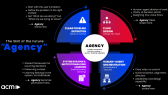
The Skill of the Future: “Agency”
One of the most frequently asked questions lately seems to be this: “Which skills will matter most in the future?” The intention behind the question is right—but the question itself is somewhat incomplete. Because in an agentic world, what truly makes the difference is not which skills you possess, but what you are able to do with them. More precisely, it is how much agency you have. By “agency,” I mean the capacity to recognize problems, take ownership, generate solutions, and turn those solutions not into one-off actions but into sustainable and scalable systems.
-

Are We Automating Chaos with AI Transformation?
Years ago—if I remember correctly, it was around 2014 or 2015—an organization with thousands of employees across both central and regional units contacted me. They wanted to digitize their physical archives, enable access to digital data through software, create and manage new data via a system, and fully integrate with various software products used by different business units. At first, the project seemed reasonable and feasible—until we learned that the number of systems requiring integration was over 100. Thinking we had misunderstood, we asked again. When we did, the responsible manager felt the need to clarify:
-
As the Definition of Success Changes: Fluidity, Orchestration, and Impact
There was a time when success was as simple as a chart hanging on the wall. Boxes were checked, tasks were completed, and calendars moved forward. The world felt consistent, predictable—almost like a mathematical equation. In those earlier eras shaped by control, predictability, and process discipline, success meant minimizing errors and running processes flawlessly.
-
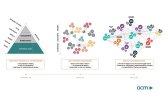
Agentic Organizations: Beyond Agility, Human + AI Synergy
In an era of organizations where humans and intelligent agents (AI-powered digital workers) create value together, learn together, and make decisions together, the Agentic Organization emerges as the new evolution of team-based agile organizations powered by artificial intelligence. It is a new way of working that preserves the principles of agility—rapid iteration, teamwork, collaboration, and feedback—and, in light of these principles, enables human intelligence and artificial intelligence to work together.
-
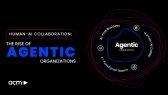
Human-AI Collaboration: The Rise of Agentic Organizations
In today's business world, speed isn't the only issue; perhaps the real challenge is managing complexity, reading uncertainty, and adapting in real time.
-

AI-First Culture: From Productivity to Organizational Intelligence
In recent years, I’ve had a recurring observation about organizations: the problem is no longer just speed. The real challenge is being able to make meaningful decisions in the face of growing complexity—and building structures that don’t merely follow change but can truly adapt to it.
-

Cultivating a Culture of Changemakers: Unleashing the Power of Innovation
The article highlights the necessity of cultivating an innovative culture within organizations, drawing from Peter Drucker's insights and Erin Meyer's "Culture Map." It stresses the importance of leveraging cultural dynamics, embracing agile approach , and empowering changemakers to drive innovation. By reframing failure, implementing rewards, providing support, and fostering open communication, organizations can create an environment conducive to innovation and growth.
-

The Blame Culture: Its Origins, Pitfalls, and How Organizations are Fighting Back
Blame culture is a toxic environment that stifles learning and innovation. Organizations should take steps to create a culture of safety and trust, focus on systems, not individuals, encourage learning and improvement, and celebrate successes.
-
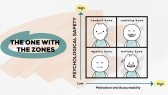
The One With The Zones
Where does this psychological safety comes? What are these zones? What benefits does the right positioning in this chart offer me and my organization? With this short blog, you will find clues about where you stand and how you can improve it
-

The First Impressions of an ACM Consultant
So, how agile can a company be? Before I started working at ACM, I couldn't answer this question. However, after spending one month at ACM, I can confidently say that I am amazed by how we can experience all the values of agility here every day, and it seems like I will continue to be surprised for a while longer.
-

The Power of Conflict
Let's take a look together at the positive effects that constructive conflict can create for organizations that see conflict not only as negative.
-

Working Agile in Startups: How to Stay Lean and Iterate Quickly
In this blog post, we'll explore how startups can work Agile to stay lean and iterate quickly.
-

Why Agile?
The most defining concepts of our world today are extraordinary speed of change, complexity, and uncertainty about the future. Therefore, the fundamental factors that determine the success of organizations can be summarized as continuously adapting to change, addressing complexity with lean solutions, and minimizing uncertainty with experimental approaches.
-

What is Lean?
The Lean method, developed by the Japanese company Toyota, is also known as the Toyota Production System (TPS). This approach has its roots in the "Lean manufacturing" movement of the 1950s. However, with the publication of Lean Software Development: An Agile Toolkit in 2003, it is now considered an integral part of Agile software development methodology. Lean Software Development is a concept that emphasizes optimizing efficiency and minimizing waste in the software development process.
-

Relentless Pursuit
The more I was into reading and experiencing Agile culture, the more I kept noticing messages related to Agile from the books and/or movies. Of course, the effect of selective perception is undeniable as well.
-

Lean & Agile Portfolio Management
I've been working as an Agile consultant for almost 7 years now. Many organisations in an attempt to become more Agile look for improvements at team level. It is not uncommon to see that most effort goes into Agile way of working at team level. Scrum is by far the most widely adopted framework by teams(regardless of how well it is implemented ).Now lets zoom into an organisation that uses Scrum at team level:
-

Who is Selecting Whom?
You may have heard of the term “Great Resignation”. In 2020, due to fear resulting from the ambiguity that Covid-19 epidemic caused all over the world, people preferred to continue working on their existing jobs which resulted into low resignation rates. Meanwhile, the way we work started to change because of the pandemic. Remote, flexible working… etc. has entered our lives owing to the necessities of Covid-19 precautions. These obligations made us realize that there are other possibilities on how we work. Indeed, the one and a half year validated that remote working can be an alternative and proved that things can go on smoothly although we work remotely.
-

Are Companies Ready For The New Normal?
The unexpected and devastating Covid-19 pandemic has engulfed the entire world. The pandemic has accelerated an already rapid rate of change and uncertainty to new heights. It's nearly hard to anticipate what kind of future awaits us now, let alone a year or even three months from now. So, how can companies that provide products and services that are essential to daily life be managed in order to thrive in such an environment?
-

What Has Changed with the Scrum Guide 2020? – PART I
The Scrum Guide, the previous version of which was published in 2017, which contains the definition of Scrum and says that the definition of Scrum includes roles, events, artifacts and the rules that hold them together, was renewed on November 18, 2020.
-

The Naked King!
You know the fairy tale “The Emperor’s New Clothes” by Hans Christian Andersen. I am talking about a short fable about the miserable situation of a smug, oppressive king who lived in ancient times, in faraway lands, who did not respect the opinions of the people.
-
Living with an Old Friend in the Modern World: “The Brain”
For tens of thousands of years, we have been living with this shabby machine, our brain. We have to admit that this veteran machine is really good at what it does. So what could be the main job of this machine?
-

Agility in the Country in the Face of Fires
Like many of us, I was continuously watching the situation and feeling powerless in the face of the fires that began in July and are still ongoing in some areas.
-
OKR Determination Methods- 2
In my previous article, I mostly discussed a method that may be used by teams that are new to OKR or teams that are observing their position and attempting to develop goals in accordance with it. In this article, I'll show you a flow that you can utilize at the management level to assist you set both vision and OKR.
-
Leadership Notes in Agile Manifesto
“First Transform Yourself, Then Attempt to Transform Others”
- 1
- 2